Grape Seed Extract and OPCs: The Overlooked Antioxidant
Comparison of Prices, Services & Prescribing Standards Finals


Free shipping on all orders
30-Day Guarantee
Comparison of Prices, Services & Prescribing Standards Finals

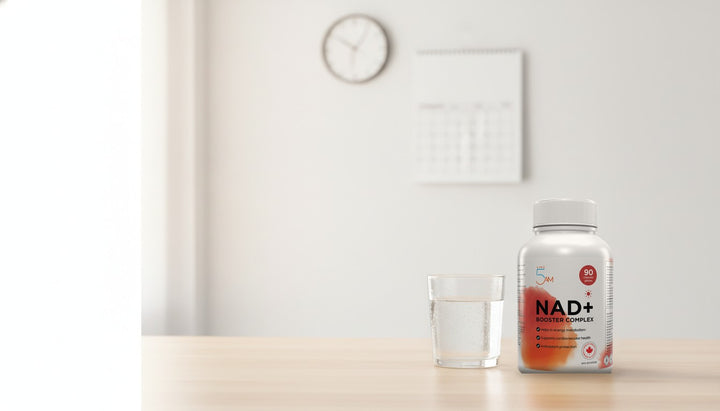
I get asked a lot why our NAD+ Booster Complex has six ingredients instead of one mega-dose of a single compound. Grape seed extract is usually the one people skim past on the label on their way to reading about NAD+ precursors or resveratrol. That's a mistake, in my opinion. It's one of the more human-evidence-backed antioxidants we use, and the Health Canada-approved language for it is narrower than most marketing around it suggests. Here's what the research actually shows, and where it gets thinner. This is general information, not medical advice.
Grape seed extract is a concentrated extract from the seeds of wine grapes (Vitis vinifera), standardized to a set percentage of oligomeric proanthocyanidins (OPCs), a class of polyphenol compounds. OPCs are a source of antioxidants that help protect cells against oxidative damage caused by free radicals. Human research has also looked at grape seed extract and blood pressure markers, LDL oxidation, and inflammatory activity, though these are research findings, not claims about treating or preventing disease.
Grape seed extract (GSE) comes from the seeds left over after winemaking, specifically from Vitis vinifera, the common wine grape. The seeds are rich in polyphenols, a broad category of plant compounds that includes flavonoids and tannins, and the compounds researchers focus on most are oligomeric proanthocyanidins, or OPCs. Not all grape seed products are made the same way, though. Some are just ground, dried seed powder with an unspecified polyphenol content. Others, including the one used in our NAD+ Booster Complex, are standardized extracts, meaning a lab has verified the OPC content sits at a defined percentage before the raw material goes into the capsule, a distinction I'll get into below.
OPCs are chains of flavan-3-ol units (catechin and epicatechin building blocks, linked together). "Oligomeric" refers to the chain length, short to medium chains rather than the very long polymeric tannins also found in grape skins and seeds, and this structure appears to make OPCs particularly effective free-radical scavengers in laboratory testing.
A frequently cited in vitro comparison by Bagchi and colleagues (1997) measured the free-radical scavenging capacity of a grape seed proanthocyanidin extract against vitamin C and vitamin E, and found the extract scavenged free radicals considerably more efficiently than either vitamin by their laboratory assay. Worth being precise: that's a test-tube comparison, not evidence a capsule outperforms vitamin C in the human body, since absorption and metabolism aren't part of that assay. What it establishes is that OPCs are a genuinely potent class of antioxidant on a gram-for-gram laboratory basis, which is why they've drawn sustained research interest since.
Because "grape seed extract" on a label doesn't tell you much on its own. Two products can both say "grape seed extract 100 mg" and contain meaningfully different amounts of the actual compounds researchers have studied, depending on how concentrated the extraction was. Our NAD+ Booster Complex uses a grape seed extract standardized to 85% OPC, meaning independent testing confirms at least 85% of the extract by weight is oligomeric proanthocyanidins, a detail also reflected in Health Canada's LNHPD record for the product's NPN. That's the difference between a raw material with verified potency and one where you're taking the label's word for it. Most of the clinical research below used standardized extracts in this same general range, not plain grape seed powder, which is why standardization is the detail worth checking rather than skipping past.
This is the area with the most human clinical data. A 2016 meta-analysis pooling 16 randomized controlled trials (Tian et al., Medicine) found grape seed extract was associated with a weighted mean reduction in systolic blood pressure of roughly 6.1 mmHg and diastolic pressure of roughly 2.8 mmHg versus placebo, more pronounced in younger or overweight participants. An earlier 2011 meta-analysis in the Journal of the American Dietetic Association found a more modest effect on systolic pressure and resting heart rate, with no significant effect on diastolic pressure or lipids. The two don't agree perfectly, which is normal when pooling trials with different doses and durations, but together they support grape seed extract as an active area of cardiovascular research, not proof it will lower a specific person's blood pressure. This finding does not mean grape seed extract treats, prevents, or manages hypertension, and it should never replace blood pressure medication or a doctor's guidance.
Oxidized LDL cholesterol is considered more disruptive to blood vessel walls than unoxidized LDL, which is why researchers have studied whether antioxidant-rich compounds can reduce that oxidation. In a randomized, double-blind, crossover study of heavy smokers, a group with elevated oxidative stress, Vigna and colleagues (2003) found a standardized grape seed extract reduced markers of LDL oxidation susceptibility versus placebo. A 2013 trial in patients with mild hyperlipidemia (Razavi et al., Journal of Medicinal Food) reported improved lipid markers and reduced oxidized LDL after supplementation. These are legitimate human findings, consistent with a concentrated polyphenol antioxidant, but not evidence that grape seed extract treats high cholesterol or prevents heart disease.
A broader 2020 review (Bhatt et al.) summarizes anti-inflammatory activity alongside the antioxidant and vascular findings, noting that proanthocyanidin-rich extracts have been associated with reduced inflammation markers and improved endothelial function across human and preclinical studies. That tracks with the general polyphenol literature, since a lot of low-grade inflammation is driven by oxidative stress in the first place. The honest caveat: "anti-inflammatory" research findings and an approved anti-inflammatory health claim are two different things. Within Canada's natural health product framework, the approved language stays at the antioxidant level, a source of antioxidants that help protect cells against oxidative damage caused by free radicals, and that's the claim we stand behind on the label.
Grape seed extract standardized to 85% OPC is one of six ingredients in our NAD+ Booster Complex. It sits in the "protector" layer of that formula, alongside hawthorn and pomegranate, providing broad-spectrum antioxidant support while nicotinamide riboside, resveratrol, and quercetin do more targeted work on the NAD+ pathway itself. Oxidative stress is one of the background drivers of cellular wear and tear, and antioxidant-rich botanicals like grape seed extract are a reasonable, well-studied way to help address that side of things, alongside a diet with colorful produce, adequate sleep, and regular movement. It is not a treatment for blood pressure or cholesterol concerns that belong with a healthcare provider. Most people take NAD+ Booster Complex once daily, generally in the morning or with a meal, as one part of a broader routine.
Grape seed extract is most often used as a source of dietary antioxidants, specifically oligomeric proanthocyanidins (OPCs), which help protect cells against oxidative damage caused by free radicals. Researchers have also studied it in relation to blood pressure markers, LDL oxidation, and inflammatory activity, though these remain research findings, not approved treatment claims.
Not exactly. OPCs are the specific class of polyphenol compounds within grape seed extract that most research focuses on. A grape seed extract can vary widely in how much OPC content it actually contains, which is why standardized percentages, such as 85% OPC, exist to verify potency.
Meta-analyses of randomized controlled trials have found associations between grape seed extract supplementation and modest reductions in blood pressure measurements in some study populations. This is a research finding, not a product claim, and grape seed extract is not a treatment for hypertension. Anyone managing blood pressure should work with a healthcare provider, not a supplement, for that.
A higher, verified OPC percentage generally means a more potent, consistent raw material, which is why standardization exists. Most human clinical research has used extracts in a similar general range (commonly 70 to 95% OPC), so a verified 85% standardization is well within the range that's actually been studied, not an arbitrary marketing number.
Anyone pregnant, breastfeeding, taking blood-thinning medication, or with a bleeding disorder should speak with a healthcare practitioner before using a grape seed extract supplement, since polyphenol-rich extracts can theoretically interact with anticoagulant medications. Checking with a healthcare provider first is the safer default if you're on prescription medication or managing a health condition.
Grape seed extract standardized to 85% OPC is a legitimately well-researched antioxidant ingredient, with more human clinical data behind it than many botanicals that get more marketing attention. The antioxidant claim, protecting cells against oxidative damage from free radicals, is backed by the most direct evidence and is what's reflected in Health Canada's approved language.
The blood pressure and LDL oxidation research is genuinely interesting, but it belongs in the "research suggests" category, not the "this product treats X" category. We include it in NAD+ Booster Complex as part of a broader antioxidant and cardiovascular-support layer, alongside hawthorn and pomegranate, not as a stand-in for medical treatment. If you're evaluating a grape seed extract supplement, the standardization percentage is the single most useful number on the label, telling you whether you're getting a potency-verified extract or a guess.
This article is for informational purposes only and is not medical advice. It does not diagnose, treat, cure, or prevent any disease, including hypertension or cardiovascular disease. Speak with a qualified healthcare practitioner before starting any new supplement, especially if you are pregnant, breastfeeding, taking blood-thinning medication, or managing a diagnosed health condition.
About the Author
Mansour Norouzi is the founder of Live 5AM, a Toronto-based, NPN-licensed supplement brand. He works hands-on with Health Canada-licensed natural health products and writes about supplement science, adaptogens, and longevity ingredients. Every Live 5AM product carries a Natural Product Number (NPN), meaning its ingredients, doses, and claims have been reviewed by Health Canada.

6-in-1 NAD+ formula. Supports cellular health, energy metabolism and antioxidant protection.