Research Watch: What Recent Studies Say About Supplements and Inflammation Markers
Comparison of Prices, Services & Prescribing Standards Finals


Free shipping on all orders
30-Day Guarantee
Comparison of Prices, Services & Prescribing Standards Finals

I check my own bloodwork once a year, and the line I watch most closely is not cholesterol. It is hs-CRP, the cheap, boring marker of low-grade inflammation that quietly tracks how the rest of your body is doing. So when people ask me which supplement "lowers inflammation," I have learned to answer with a question back: which marker, and starting from where? This week I read through the 2024 to 2026 research on supplements and inflammation markers, and a clear pattern showed up.
Quick answer: Across recent trials, C-reactive protein (CRP) is the inflammation marker that most reliably drops with supplementation. Interleukin-6 (IL-6) and TNF-alpha are stickier and move far less consistently. The biggest effects show up in people who start with elevated inflammation, and almost nothing works in under 8 to 12 weeks.
CRP is made by the liver in response to IL-6 signaling, and it is stable, cheap to measure, and slow to change, which makes it a good summary readout of weeks of inflammatory tone. That stability is probably why it dominates the positive findings. A 2025 meta-analysis of eight randomized controlled trials (444 people with metabolic syndrome) found that magnesium supplementation for at least two months lowered CRP, with the effect strongest at the 12 to 16 week mark. A separate 2025 review pulling together 28 studies reached the same conclusion on CRP, while noting that magnesium's effect on oxidative-stress markers was far less certain. When the same nutrient helps one marker and not another, that is a signal to read the marker, not the headline.
IL-6 and TNF-alpha are upstream signaling molecules that spike and fade quickly, so a single blood draw catches a noisier picture. The clearest example came from a 2026 meta-analysis of 41 omega-3 trials in athletes: EPA and DHA reliably reduced IL-6, TNF-alpha, creatine kinase, and next-day muscle soreness, while CRP responses were scattered across studies. The authors traced that scatter to differing baseline inflammation and blood-sampling timing. In other words, the marker that moved depended heavily on who was studied and when their blood was drawn, which is exactly why I distrust any product that promises to "lower inflammation" as if it were one dial.
Consistently, yes. A 2025 meta-analysis of 20 nanocurcumin trials (1,394 participants with metabolic syndrome) reported drops across all three markers, TNF-alpha, IL-6, and hs-CRP, but the population was already metabolically inflamed and the formulation was an enhanced-absorption nano version, not standard kitchen turmeric. The magnesium-plus-vitamin-D research tells the same story from another angle: a 2025 meta-analysis of nine trials found the CRP and TNF-alpha benefit was concentrated in people who were vitamin-D deficient, overweight, or female. If your inflammation is already low, there is simply less room for a supplement to move the number.
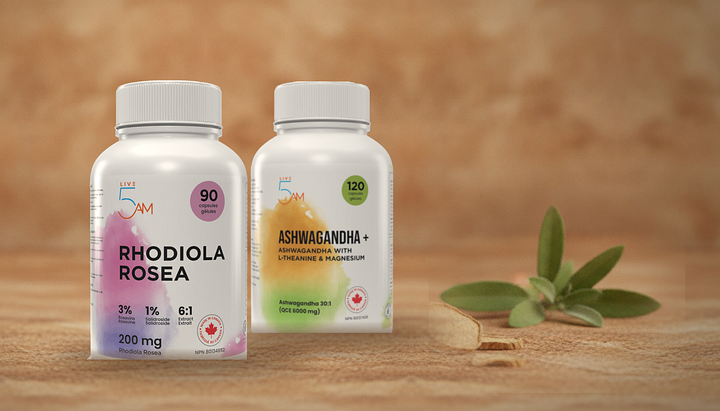
Two honest cautions. First, sample sizes are often tiny. A 2024 meta-analysis of chia seed found a real CRP reduction, but it rested on just four trials and 210 people, and IL-6 and TNF-alpha did not budge. Second, the eye-catching numbers usually come from small or industry-linked studies. A 2025 ashwagandha safety pilot reported a 51% CRP drop, which sounds dramatic, but it involved only 40 healthy older adults, CRP was a secondary outcome, and the work was tied to the ingredient supplier. I include findings like that because they are real, but a single 40-person pilot is a reason to stay curious, not a reason to restock your cabinet.
The most repeatable signals in recent research are magnesium for CRP (especially if your intake is low to begin with) and omega-3 EPA/DHA for the exercise-related markers IL-6, TNF-alpha, and soreness. Curcumin looks promising but mostly in already-inflamed populations and in absorption-enhanced forms. None of these are fast: the trials that worked ran 8 to 16 weeks. The unglamorous truth is that diet, sleep, body composition, and not smoking move CRP more than any capsule, and supplements work best as a top-up on an already-decent foundation.
If inflammation is on your radar, the practical takeaway is patience and a baseline. Ask your doctor for an hs-CRP test, give any change at least 12 weeks, then retest rather than guessing. Magnesium is easy to fold into an evening routine, and if you eat little oily fish, a daily EPA/DHA dose is a reasonable addition. Just resist the urge to judge a supplement by how you feel this week, because inflammation markers do not work on that timescale.
We make Magnesium Bisglycinate because it is the form most people tolerate well at a daily dose, and magnesium is the single nutrient with the most consistent CRP evidence in recent reviews, particularly for people whose intake runs low. We are deliberately not going to tell you our capsules will "lower your inflammation," because the research does not support that kind of blanket claim for any one product. What the evidence supports is closing common nutrient gaps, staying consistent for a few months, and measuring instead of assuming. That is the standard we hold our own formulations to.
No. CRP is one downstream marker of systemic inflammation, not inflammation itself. It is useful because it is stable and easy to measure, but it does not capture localized or tissue-specific inflammation.
In the trials that worked, the answer was typically 8 to 16 weeks. Shorter periods rarely show a reliable change, so retesting before 12 weeks usually tells you very little.
They target different markers. Magnesium has the most consistent evidence for lowering CRP; omega-3 EPA/DHA shows the clearest effect on IL-6, TNF-alpha, and exercise-related soreness. They are not interchangeable.
Probably not much. Recent meta-analyses found the largest benefits in people who started with elevated inflammation, deficiency, or excess weight. With a low baseline, there is little room to move.
Inflammation is not one number, and no supplement turns it off. CRP is the marker most likely to respond, magnesium and omega-3 have the most repeatable evidence, and the people who benefit most are those who start inflamed and stay consistent for months. Test, give it 12 weeks, retest, and treat any product that promises to simply "lower inflammation" with healthy skepticism.
Related reading: Research Watch: Supplements for Cardiovascular Health · Research Watch: Stress and Cortisol · Does Magnesium Actually Help With Anxiety? · Magnesium Bisglycinate 200mg
About the author
Mansour Norouzi is the founder of Live 5AM. He reviews every article on this blog, reads the primary research behind the claims, and writes from a simple bias: show the evidence, name the limitations, and never oversell a supplement. He holds bloodwork, not vibes, as the scoreboard.

Daily magnesium for energy and muscle function.