Why Do I Crash Every Afternoon?
Comparison of Prices, Services & Prescribing Standards Finals


Free shipping on all orders
30-Day Guarantee
Comparison of Prices, Services & Prescribing Standards Finals

A note from Mansour, founder of Live 5AM. The afternoon crash is the single most common complaint I hear from professional customers, and most of them have been told it is a coffee or sugar problem. It usually is not. Here is what is actually happening in your physiology between 1 and 4 PM, and what the research suggests you can do about it without another espresso.
The afternoon energy dip is a normal part of human circadian biology. A drop in your internal clock signal between roughly 1 pm and 3 pm, combined with a post-meal rise in blood sugar followed by a sharp comedown, pulls alertness down even on a good night's sleep. It is not a caffeine problem or a willpower problem. Knowing the mechanism makes it a lot easier to address.
Your body runs on roughly 24-hour cycles governed by a cluster of neurons in the brain called the suprachiasmatic nucleus. That clock drives two overlapping alertness signals throughout the day. The first peaks in the morning. The second comes in the early evening. Between them, there is a biological valley, usually landing between 1 pm and 3 pm, where your drive to stay awake drops measurably.
Running alongside that clock signal is adenosine, a byproduct of normal cellular energy use that accumulates the longer you are awake. By early afternoon, adenosine levels have been building for seven or eight hours. Caffeine only blocks adenosine receptors temporarily. When the caffeine clears, adenosine floods back in, which is partly why a morning coffee can make the 2 pm crash feel worse than it would otherwise.
Lunch adds another layer. A moderate-carbohydrate meal causes blood glucose to rise and then fall over roughly 90 minutes. Research published in Nutrients shows that the amplitude of that post-prandial glucose swing correlates with self-reported sleepiness afterward. A larger glycaemic spike tends to produce a harder dip. This is not unique to sugary meals. Even a balanced lunch produces some version of it.
Put those three factors together, the circadian trough, accumulated adenosine, and a post-meal glucose comedown, and the afternoon crash is almost overdetermined. It would happen to most people under most conditions. The question is how pronounced it is and whether it is interfering with work.
A few explanations get repeated endlessly in wellness content, and most of them are incomplete.
It is not just about sugar. Cutting sugar from lunch can reduce the glycaemic swing, and that does help some people. But the circadian dip happens regardless of what you eat. People who skip lunch entirely still experience reduced alertness in early afternoon. The glucose curve modifies the depth of the crash. It does not create it.
It is not a sleep debt problem by itself. Sleep debt makes the crash worse, sometimes dramatically so. But research on circadian rhythms in well-rested subjects shows the early afternoon dip persists. If you are sleeping adequately and still crashing hard every day, poor sleep is probably not the whole story.
It is not a caffeine dependence problem by itself. Caffeine can mask the dip, but the dip was already there. People who have never consumed caffeine in their lives still show the circadian alertness trough. Blaming coffee misses the underlying biology.
Chronic stress can deepen the crash significantly. Elevated cortisol through the morning, which is common under sustained psychological stress, tends to flatten the natural cortisol awakening response and leave the afternoon feeling emptier. If your energy pattern is good in the morning and then collapses around 1 pm, stress physiology is worth examining alongside sleep and diet. You can read more about how cortisol interacts with daily energy in our post on cortisol and daily rhythm.
The good news is that the biology here is well understood and there are practical inputs that shift how deep the dip goes.
Light exposure after lunch. Getting outside, or sitting near a bright window, for 10 to 15 minutes after your midday meal is one of the most underused tools available. Bright light suppresses melatonin and provides a direct input to the suprachiasmatic nucleus that can delay the circadian trough by 20 to 30 minutes and reduce its depth. This costs nothing and has no side effects.
A short walk. A 10-minute walk after lunch produces a meaningfully smaller post-prandial glucose spike compared to sitting. A 2022 meta-analysis in Sports Medicine found that brief walking after meals reduces peak glucose response and flattens the following dip. This is distinct from general fitness benefits. It is a mechanical effect on blood sugar.
Hydration. Mild dehydration, defined as roughly 1 to 2 percent of body weight in fluid loss, produces measurable impairments in mood, concentration, and perceived fatigue. Most people are mildly dehydrated by early afternoon. Drinking 250 to 500 mL of water between noon and 1 pm is a genuinely useful intervention that gets overlooked because it is not interesting enough to market.
Meal composition. Shifting toward a lunch with a lower glycaemic load, meaning more protein, fat, and fibre with fewer refined carbohydrates, reduces the post-meal glucose spike and therefore the comedown that follows it. This does not eliminate the circadian trough but it reduces its depth.
NAD precursors for cellular energy support. NMN (nicotinamide mononucleotide) is a direct precursor to NAD+, a coenzyme that sits at the centre of mitochondrial energy production. NAD+ levels decline with age, and lower NAD+ is associated with reduced cellular energy efficiency. Research suggests that NMN supplementation may help support NAD+ levels in adults. The mechanism is relevant here because mitochondrial function affects how efficiently your cells convert glucose and fatty acids into usable energy throughout the day. It is not a stimulant. It does not produce an energy spike. The effect, if present, is more like a background improvement in metabolic efficiency. You can read more about how NMN works in our post on NMN supplements in Canada.
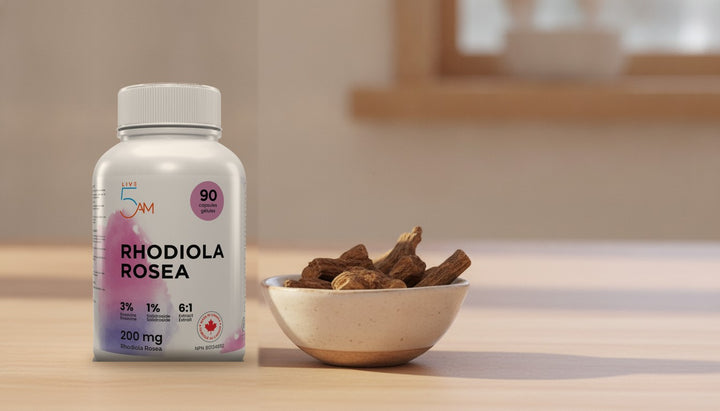
Rhodiola rosea for stress-driven fatigue. If your afternoon crash is connected to mental fatigue and sustained cognitive load rather than simple circadian biology, Rhodiola rosea is the most evidence-supported adaptogen for this pattern. Several randomized controlled trials have found that standardized rhodiola extract may help support mental performance and reduce fatigue under conditions of psychological stress. It is not a stimulant. The effect in human trials is modest and consistent, which is the realistic expectation for any adaptogen.
The afternoon crash becomes more manageable when you treat it as a predictable event rather than a surprise. If you know the dip arrives around 1:30 pm, you can schedule your lowest-demand work there and protect your peak cognitive hours for the morning.
From a supplement standpoint, the practical question is what you are trying to address. If your energy feels generally flat across the whole day and you are in your 30s or older, supporting NAD+ levels through NMN 600mg is a reasonable place to start. It is taken in the morning and supports cellular energy metabolism over time. It is not designed to rescue a specific afternoon window. Think of it as infrastructure rather than intervention.
If your crash is specifically tied to high-stress days, the ones where you have been context-switching since 8 am and your focus is gone by noon, Rhodiola Rosea 200mg addresses a different part of the problem. Its role is stress-resilience and mental fatigue, not direct energy metabolism. Some people find the combination useful because the two products address different mechanisms. Neither is a substitute for the basics: sleep, light, movement, and managing your lunch-to-crash window.
A practical sequence that takes roughly 15 minutes total: eat lunch, take a 10-minute walk, drink a full glass of water, and sit near a window for the next 20 minutes before your next meeting. That combination hits three of the four main levers simultaneously. Add the supplements in the morning as a longer-term support layer, and the afternoon becomes noticeably less of a problem for most people who implement it consistently.
Not exactly. The post-meal glucose decline contributes to the dip, but the circadian trough happens independently of blood sugar. Even people who skip lunch or eat very low-carbohydrate meals experience reduced alertness in early afternoon, just with a smaller glycaemic component. Treating it purely as a blood sugar problem is too narrow a frame.
A short nap of 10 to 20 minutes, timed before 3 pm, can meaningfully restore alertness without significantly affecting night-time sleep for most people. Research from NASA and the National Sleep Foundation supports brief napping during the circadian trough. Naps longer than 30 minutes risk entering slow-wave sleep, which produces grogginess on waking and can reduce sleep pressure later. Timing and duration matter more than whether to nap at all.
NMN is a precursor to NAD+, which is central to how mitochondria produce energy. Research suggests NMN supplementation may help support NAD+ levels in adults, and NAD+ decline is associated with reduced metabolic efficiency. The effect is not comparable to caffeine. It does not produce an acute energy boost. If it helps, you are more likely to notice it as sustained, even energy across the day rather than a specific lift in the afternoon window.
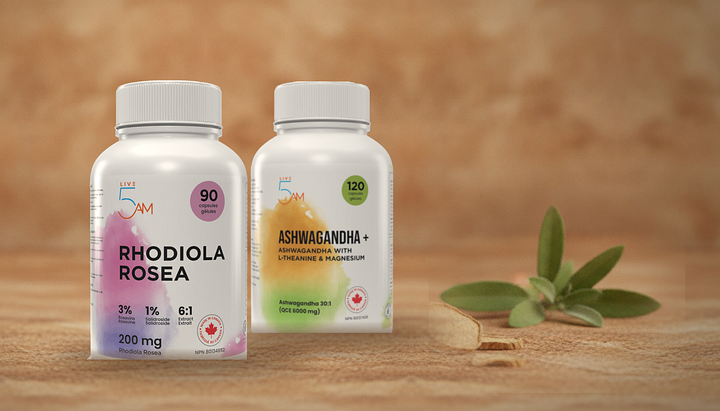
They work on different mechanisms. Rhodiola is generally considered more activating and is better studied for mental fatigue, focus under stress, and cognitive endurance. Ashwagandha is more studied for cortisol reduction and sleep quality. For afternoon mental fatigue specifically, rhodiola has the stronger evidence base. For people whose crash is connected to chronic stress and poor sleep, ashwagandha addresses the upstream cause more directly. The two are not interchangeable.
Chronic stress elevates cortisol throughout the morning, which can blunt the natural cortisol awakening response that provides early-day alertness. By early afternoon, cortisol has dropped but the system is already running below capacity from the morning's load. Sustained cognitive effort also depletes glucose in the prefrontal cortex at a faster rate than baseline, which compounds the circadian dip. The more mentally demanding the morning, the harder the afternoon landing tends to be.
Afternoon fatigue is a circadian event, not a character flaw. The dip between 1 pm and 3 pm is built into human biology, shaped by adenosine accumulation, your internal clock, and the metabolic response to eating. Most people can meaningfully reduce its depth through a short post-lunch walk, natural light exposure, adequate hydration, and a lower glycaemic load at lunch.
Supplements occupy a supporting role. NMN may help support the mitochondrial energy machinery that underlies sustained energy throughout the day. Rhodiola may help support mental resilience on days when cognitive fatigue is driving the crash more than circadian biology. Both work in the background over weeks, not minutes. They are most useful when the basics are already in place.
If the crash is severe, persistent, and not responsive to the lifestyle changes above, it is worth discussing with a healthcare provider. Conditions including hypothyroidism, sleep apnea, and iron deficiency can all produce fatigue patterns that overlap with the normal circadian dip and require different interventions entirely.
This article is for informational purposes only and does not constitute medical advice. NMN 600mg and Rhodiola Rosea 200mg are licensed natural health products (NPN) sold in Canada. They are not intended to diagnose, treat, cure, or prevent any disease or health condition. Consult a qualified healthcare practitioner before beginning any new supplement, particularly if you have an existing medical condition or take prescription medications.
Based in Toronto. Live 5AM is a Health Canada NPN-licensed supplement brand built for sustainable performance over hype. Mansour personally reviews every article on this site against source studies and NPN records before it publishes. Reach him at info@live5am.com.

NAD+ precursor. Supports energy metabolism and antioxidant protection.